Avoiding sticky situations when brewing with adjuncts
- The Hoppy Horseman
- Education
- 04 Aug, 2023
Q: How do I prevent a stuck mash when brewing with adjuncts like corn or wheat?
A: Picture a perfect brew day. Everything seems to be going right. You hit your mash temp perfectly. Everything is looking and smelling great. You get ready to transfer to the boil kettle and… nothing comes out of the spigot.
Chances are you’ve got a stuck mash. This can happen when grain particles in the mash gelatinize at the bottom of of the mash tun to create a thick paste, which clogs beer lines and causes all kinds of headaches for you, the brewer. Most of the time, malted barley doesn’t break down in such a way to cause these problems, but brewing with adjuncts like wheat, spelt, rice and corn can create big headaches really quickly. Especially with the Horsemen German Weissbier Competition and O’Zapft Is coming up, it’s best to review best practices to avoid this sticky situation.
Rice hulls
The easiest fix for a stuck mash is adding rice hulls to the bottom of your mash to filter the adjunct grains. They add no flavor and no sugar, so it never hurts to throw in a handful of rice hulls before adding your grains to the mash tun. The more adjuncts you have, the more rice hulls you’ll want to add. Some recipes can use just a handful, but toss in up to two pounds for brews with a high percentage of adjuncts.
Watch your crush
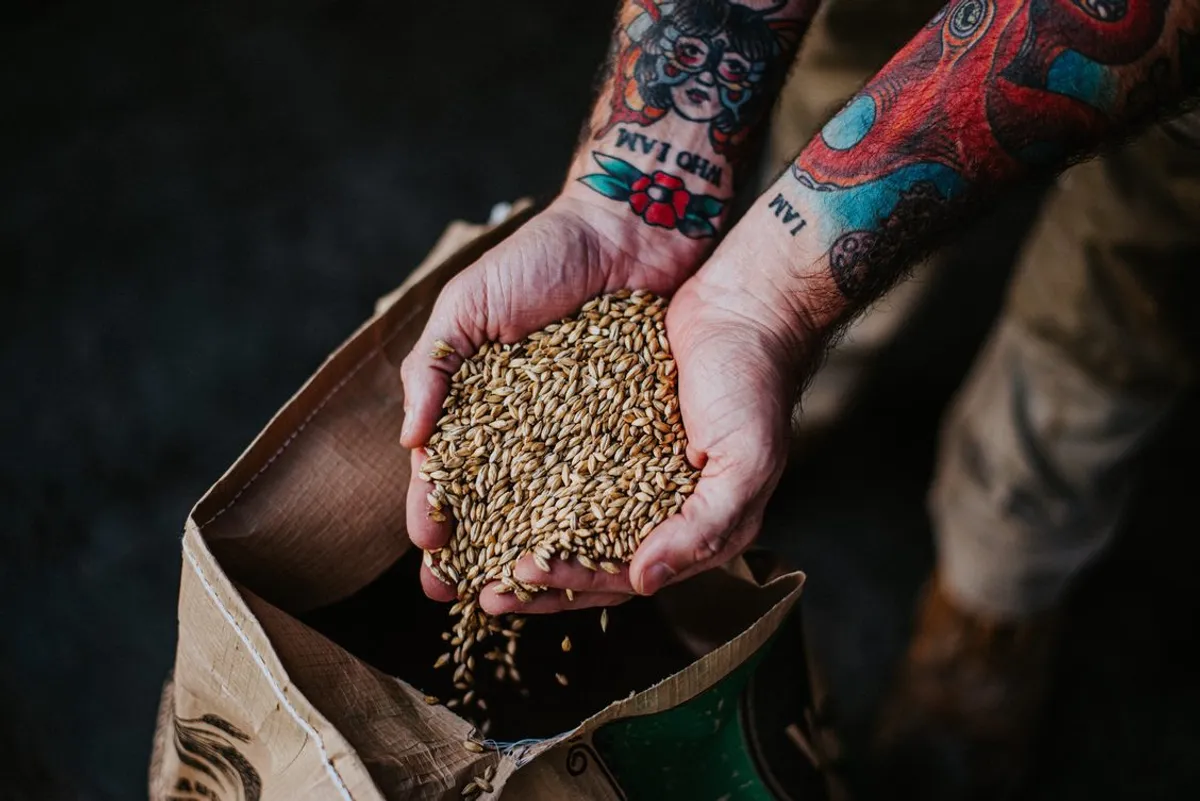
Grains crushed too finely can change all kinds of things in your final beer, and it can also gum up the works as you transfer. Grains should be broken, but with husks intact. If you really want to be sure it’s correct, you may need to adjust your grain crusher for each kind of grain you use.
Lauter slowly
Transferring your wort to the boil kettle should happen slowly. You want to avoid creating a vacuum that solidifies the grain. Start by opening those valves slightly to create a trickle, then adjust from there.
Keep it hot
Because those grains will start to solidify at lower temperatures, using a mash-out technique that adds more water to the mash tun at about 170°F can help keep that temperature high. A great way to do this is to sprinkle the hot water over the top of the grains as you transfer to the boil kettle at the same rate.