Style in Focus: Munich Helles
- Michael Myers
- Education
- 04 Dec, 2022
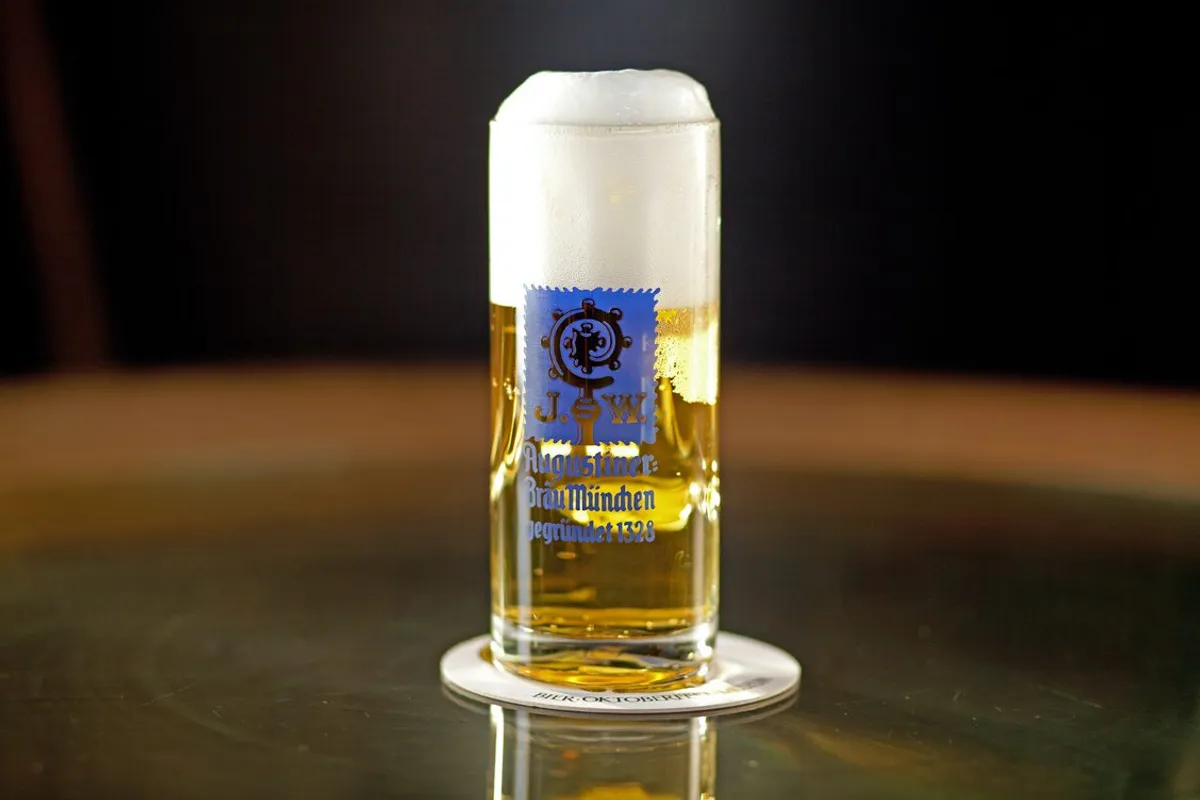
The devil is in the details with this style. It’s a delicate balance in many ways. A little malty, but by no means sweet. Pleasantly full-bodied, but by no means full bodied. A little grainy, but by no means too hearty. A tiny bit hoppy, but by no means too bitter. A little bit sulfurous, but no disturbing off-flavors.The Müchner Hell is the simple beer that is so difficult to brew.
-
By the Numbers - The BJCP Style Guidelines call for an original gravity of 1.044 to 1.048 SG and an alcohol content of 4.7% to 5.4%, resulting in an apparent degree of fermentation of around 80%. The bitterness is only low with 16 to 22 IBU and thus a bitterness to original gravity ratio of about 1.5. The color is a light golden yellow at 3.0-5.0 SRM.
-
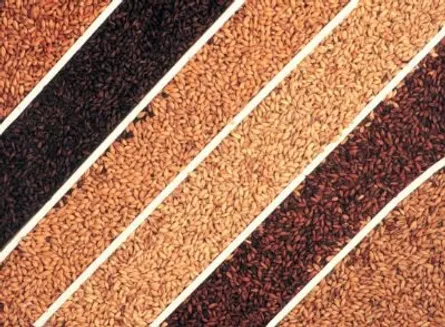
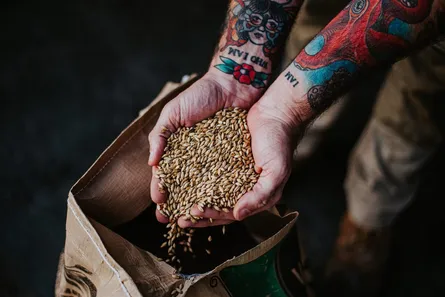
The Grist - Münchner Hell is a showcase for Pilsner malt. It is responsible for the light color and the pure, cereal-sweet aroma. Recipes with 100% Pilsner malt are quite common. Some extra-light caramel malt, such as Weyermann CARAPILS, can be used to improve foam stability. Personally, I wouldn’t go over 5% of the caramel malt, but some recipes call for almost 10% or even 20%. In addition, very small proportions (less than 5%) of Munich malt and light caramel malt can be used to enhance the maltiness and full-bodiedness.
-
Water - Munich water is medium-hard, which makes it unsuitable for a Munich Hell beer. Even with small amounts of hops, it provides an unpleasantly scratchy bitterness. In order to be able to present the light beer color and a pleasant bitterness, the residual alkalinity of the water should be reduced in the direction of 0–2°dH, through precipitation of carbonate and/or acidification. For the calculation, I recommend an online water calculator such as at MaischeMalzundMehr or the spreadsheet EZ Water Calculator. The mash pH should be around 5.4 during the maltose rest.
-
Mash - If you want to brew Munich Hell in the traditional way, you use a decoction mashing process. Due to the cooking level, the typical, slightly hearty, malty taste is achieved even with very light batches. Recipes with 100% Pilsner malt are common in decoction processes. In order to preserve the light color and not to release too many tannins from the husks, the cooking time of the partial mash should not be too long; 10-15 minutes is sufficient. Of course, a Munich Hell can also be produced with a single or multi-stage infusion mash. To compensate for the lack of decoction in terms of taste, caramel malt or some Munich malt can then be added.
-
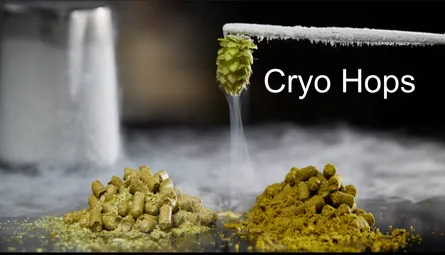
Boiling and Hops - Cooking times of 90 to 120 minutes are normal for Munich Hell, although I would personally go for the lower limit or even less in order to keep the coloring as low as possible. Only German or continental European noble hops should be used for the bittering. These include the Hallertau varieties Tradition and Mittelfrüh, Tettnanger and Hersbrucker as well as the Czech Saazer. The Polish Lubelski or Styrian Golding are also options. The bitterness is between 16 and 22 IBU, hop aromas in smell and taste are only slight to moderate. The hopping scheme depends on how much hop aroma you want in the lager. Pure bittering, in which all the hops are added directly after the wort break, produces a neutral bitterness with no hop aroma in smell or taste. With the traditional hopping in 3 doses, after about 15 (bitter), 75 (taste) and 90 minutes (nose), you can control the intensity of the hop taste and smell by adjusting the ratio of the doses. The hops with the finest aroma are added at the latest, for example only after the boil has ended in the whirlpool. The Munich Hell is not a hoppy beer. Less is more here, both in terms of bitterness and aroma. The hops should not push themselves into the foreground, but only balance out the light maltiness.
-
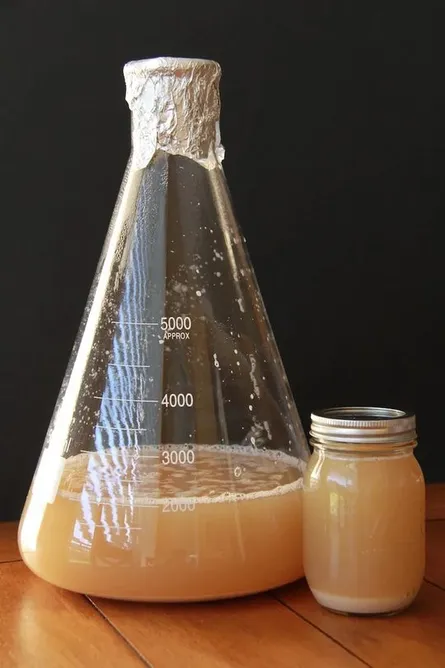
Yeast and Fermentation - Münchner Hell is fermented cool with bottom-fermenting yeast. Bavarian lager yeasts are best, as they also emphasize the maltiness. Fresh bottom-fermenting brewer’s yeast is best, but if you’re not fortunate enough to have a friendly brewery nearby, liquid yeasts such as White Labs WLP920 Old Bavarian Lager Yeast, WYEAST 2206 Bavarian Lager, or WYEAST 2308 Munich Lager will do. If only dry yeast is available, Fermentis Saflager W‑34/70 would be a good choice. In addition to robustness and a neutral profile, it shines with good sedimentation and leads to a very clear beer relatively quickly.
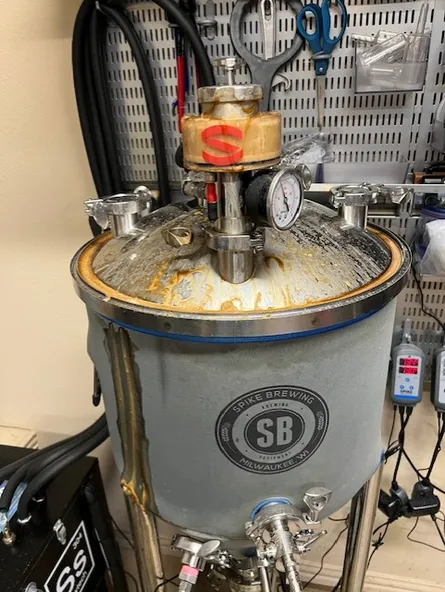
The fermentation should take place in the lower range of the specified fermentation temperature, at around 48-52°F. This ensures the pure bottom-fermented taste without esters or higher alcohols. At this low temperature, it is essential to ensure that sufficient yeast is used. A starter is mandatory for liquid yeast. In the case of dry yeast, it is essential to adhere to the manufacturer’s recommendation for the quantity (usually approx. 1g dry yeast per liter of wort).
After fermentation, the Munich Hell should be stored for at least four weeks at the lowest possible temperature – around 32°F is ideal. This allows the yeast to settle well, so the beer can become very clear even without filtering.
— Michael Myers, Sergeant-at-Arms